Science motivation
MIGHTEE (MeerKAT International GHz Tiered Extragalactic Exploration) is an extragalactic radio survey carried out with the MeerKAT telescope in South Africa (Jarvis et al. 2016). Reproducing this field with SKA1-MID and VLA configurations lets us compare expected performance before SKA operations begin, and quantify the gain in depth and resolution.
- Measure the achievable rms at 1.0–1.7 GHz for matched integration times.
- Compare angular resolution and source confusion between compact and extended arrays.
- Validate the skasim pipeline against real survey parameters and weblog outputs.
Simulation runs
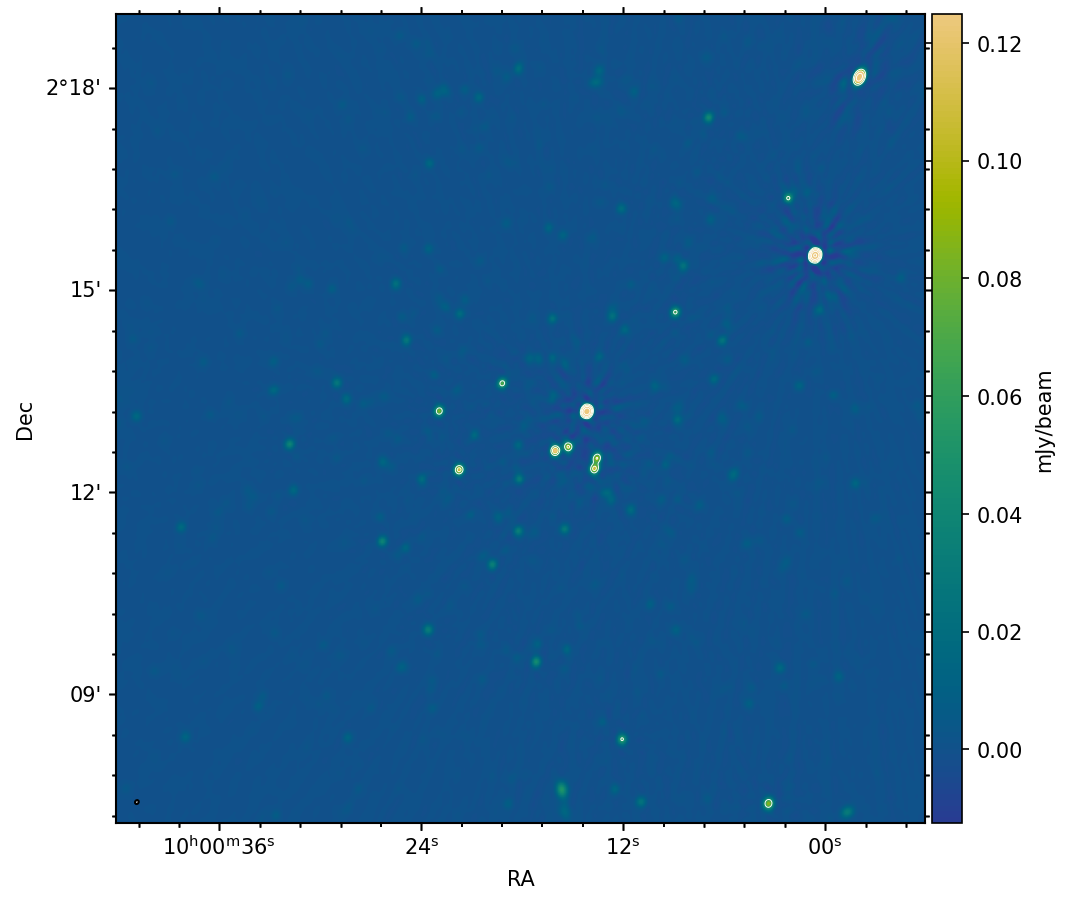
Four matched runs share the MIGHTEE DR1 COSMOS field component sky model (Hale et al. 2025), a 0.2° field of view, and imaging with WSClean (plus an OSKAR dirty check). All runs completed and produced weblogs; durations and beam shapes are taken directly from those logs.
| Parameter | MeerKAT | SKA1-MID | VLA B | VLA D |
|---|---|---|---|---|
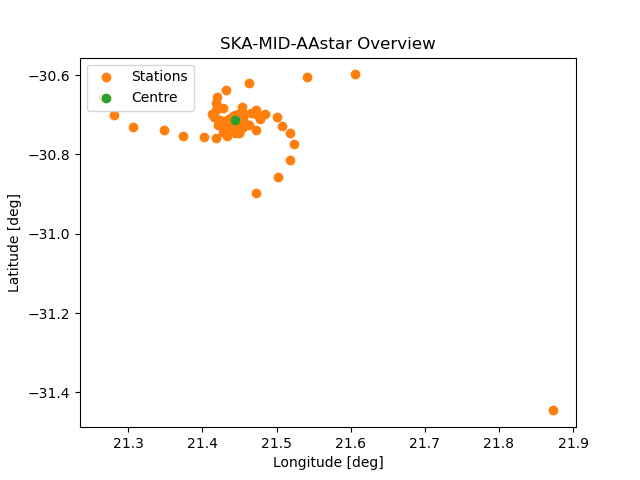
| Dish / Antennas | 13.5 m · 64 | 15.0 m · 144 | 25 m · 27 | 25 m · 27 |
| Frequency | 1284 MHz (856–1712 MHz) | 1310 MHz (950–1670 MHz) | 1500 MHz (1.0–2.0 GHz) | 1500 MHz (1.0–2.0 GHz) |
| Bandwidth | 856 MHz | 720 MHz | 1000 MHz | 1000 MHz |
| Obs time | 6 h | 20 min | 4 h | 4 h |
| Robust | −2 | 0 | −2 | −2 |
| Beam | 5.0″ × 3.3″, PA 145.8° | 3.6″ × 3.1″, PA 144.0° | 3.3″ × 2.3″, PA 118.8° | 30.6″ × 24.9″, PA 133.7° |
Phase centre RA 150.075385°, Dec +2.218322°. Image size 2048 × 2048 pixels at 0.3516 arcsec, FoV 0.2°.
Sky model
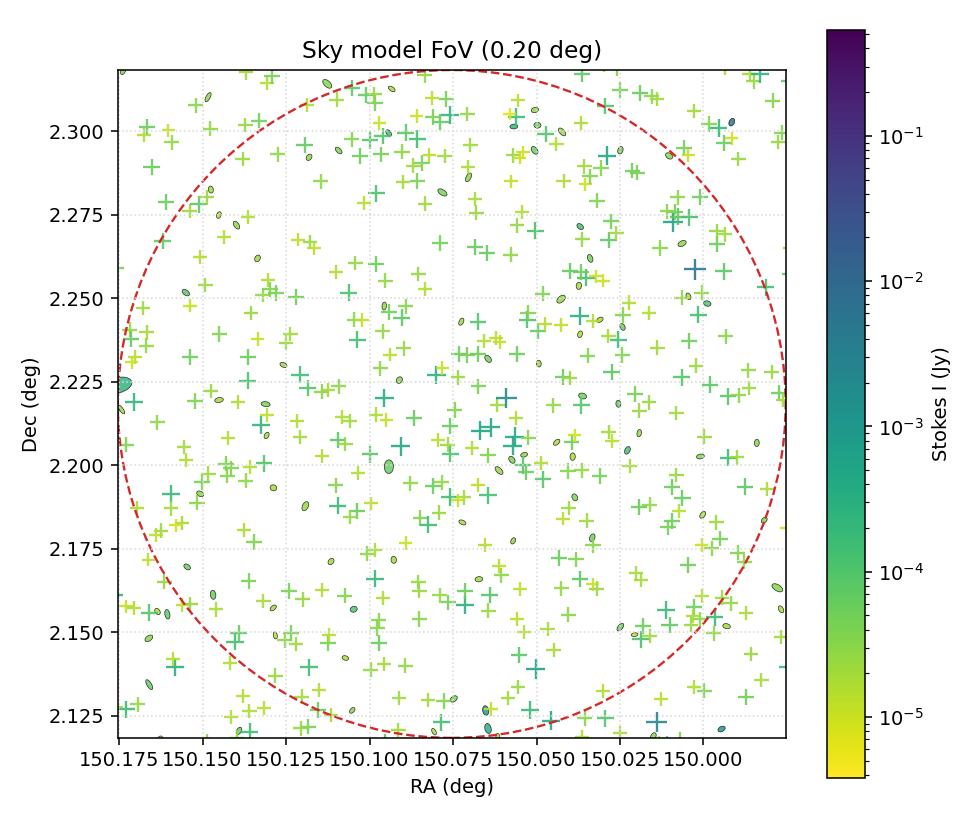
The input catalog is mightee-dr1.json, a
FITS-derived component catalog. Below is the field-of-view
zoom used by all four runs.
Results
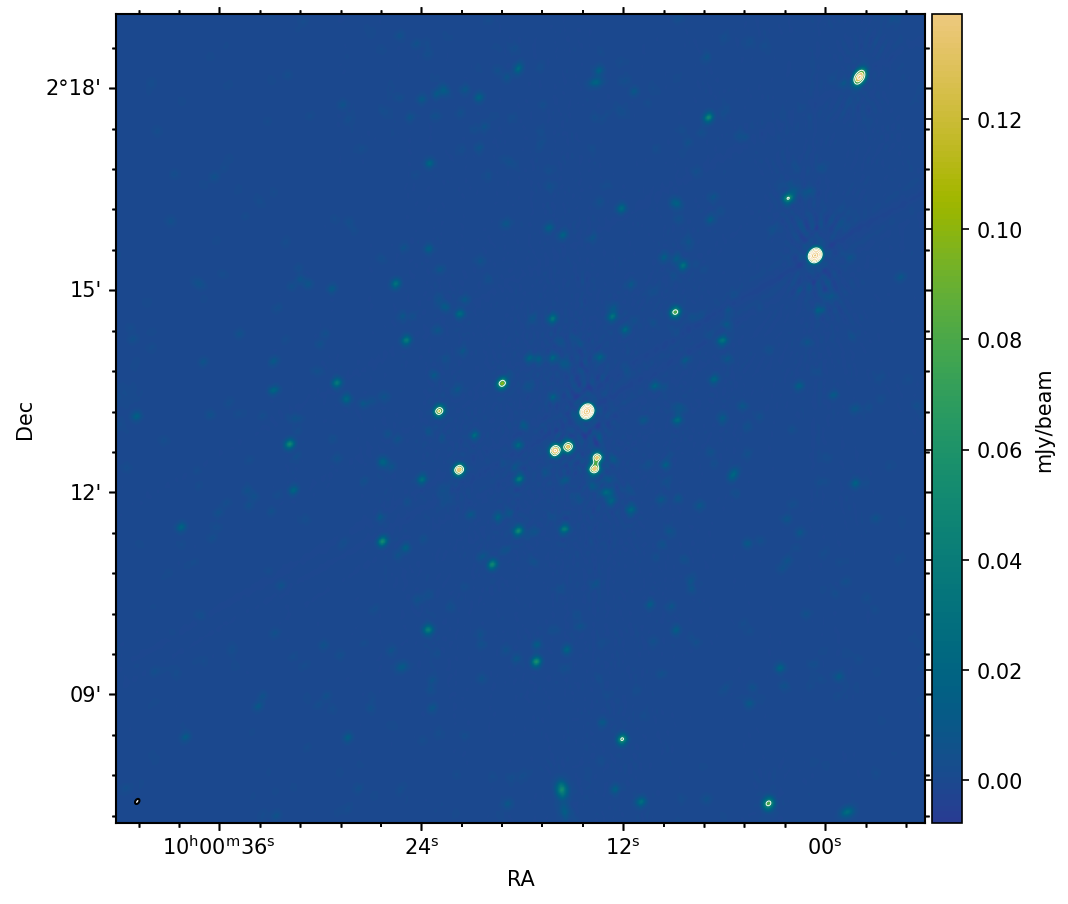
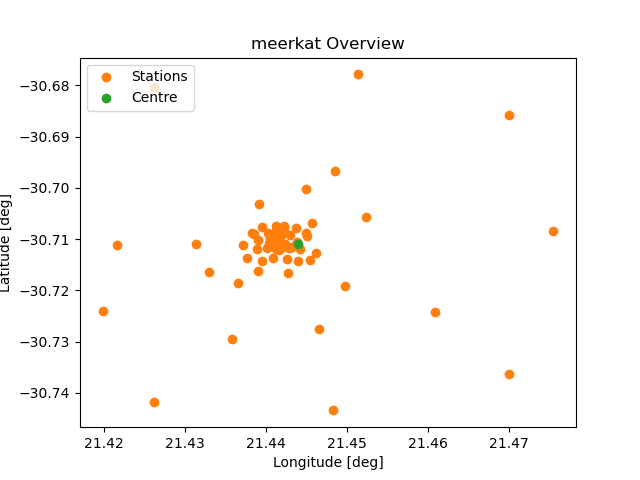
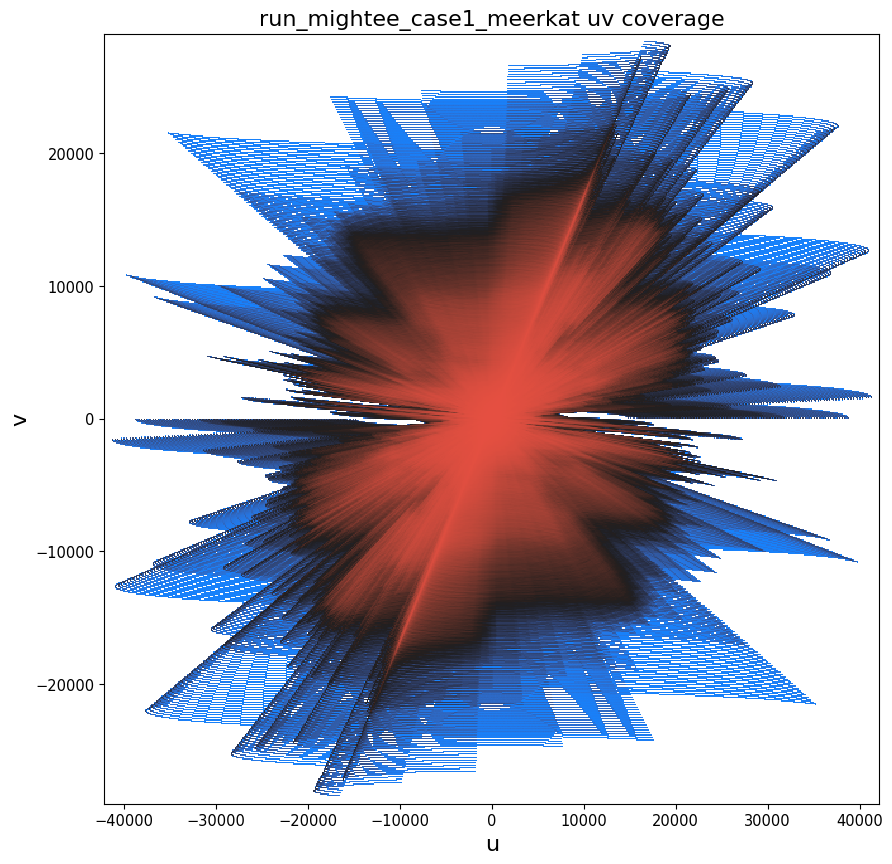
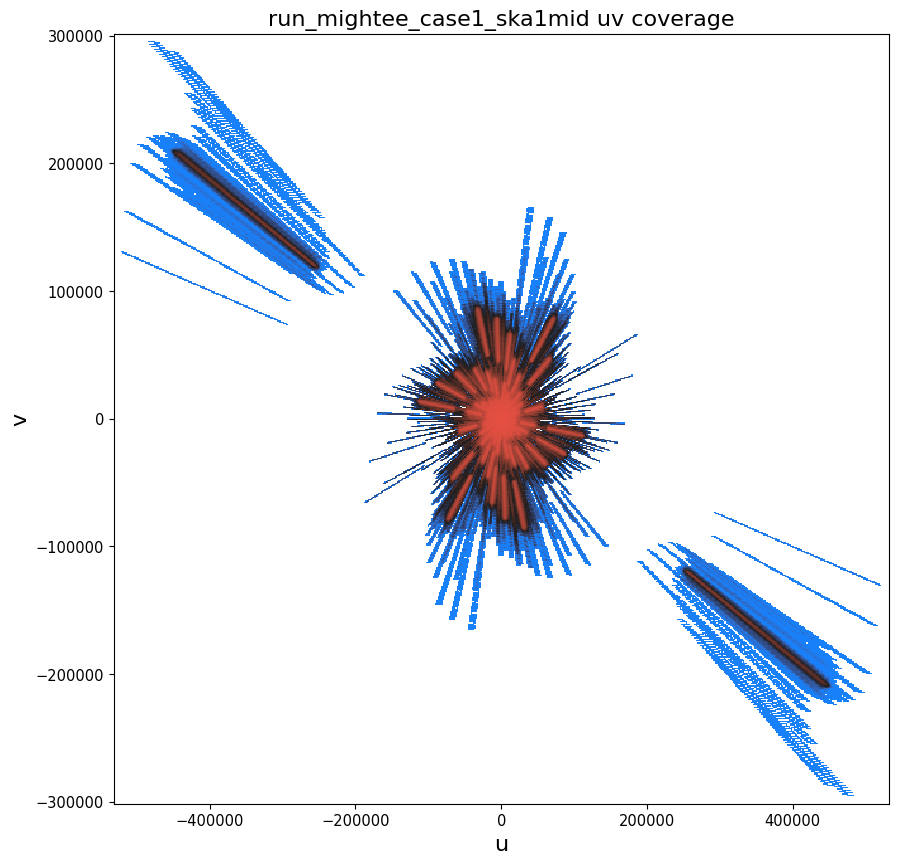
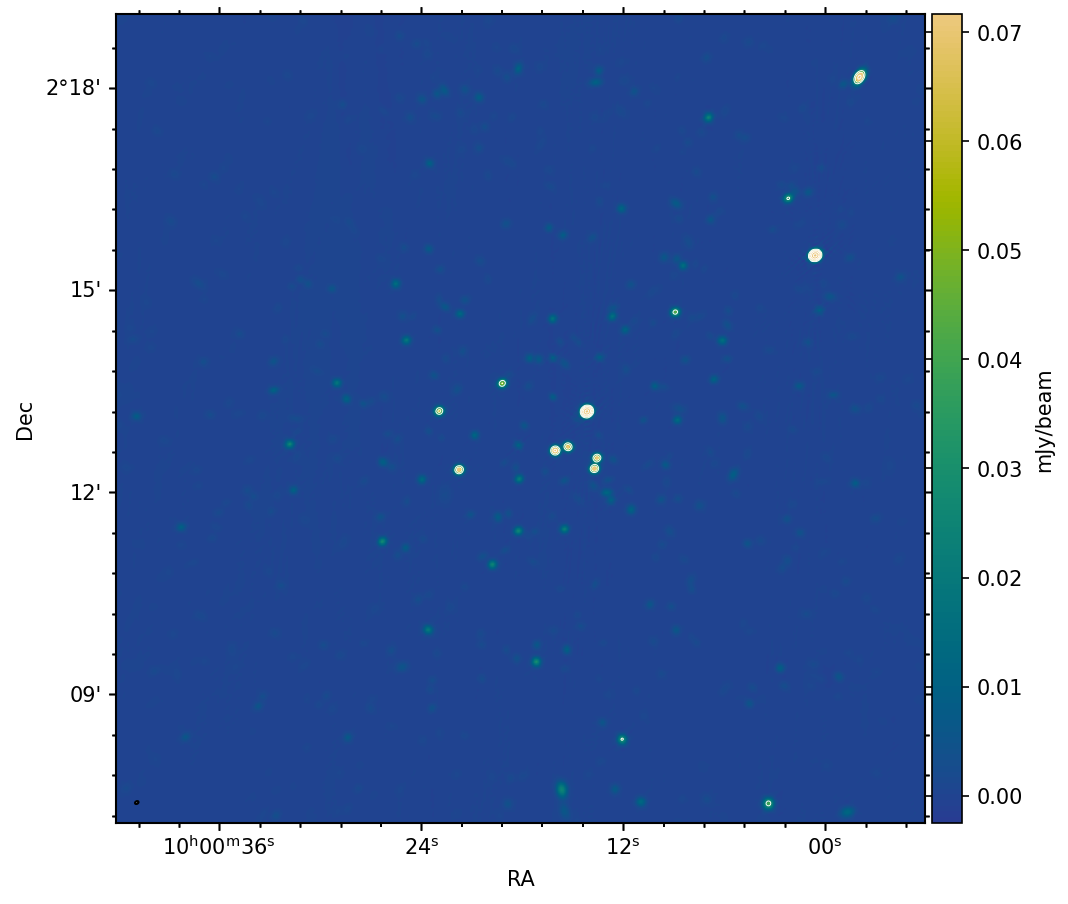
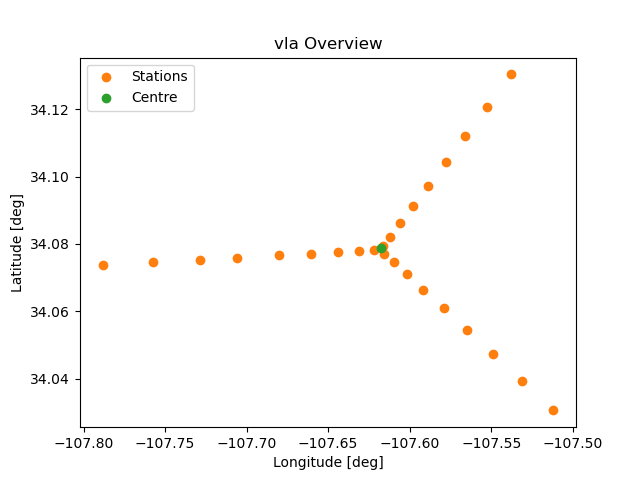
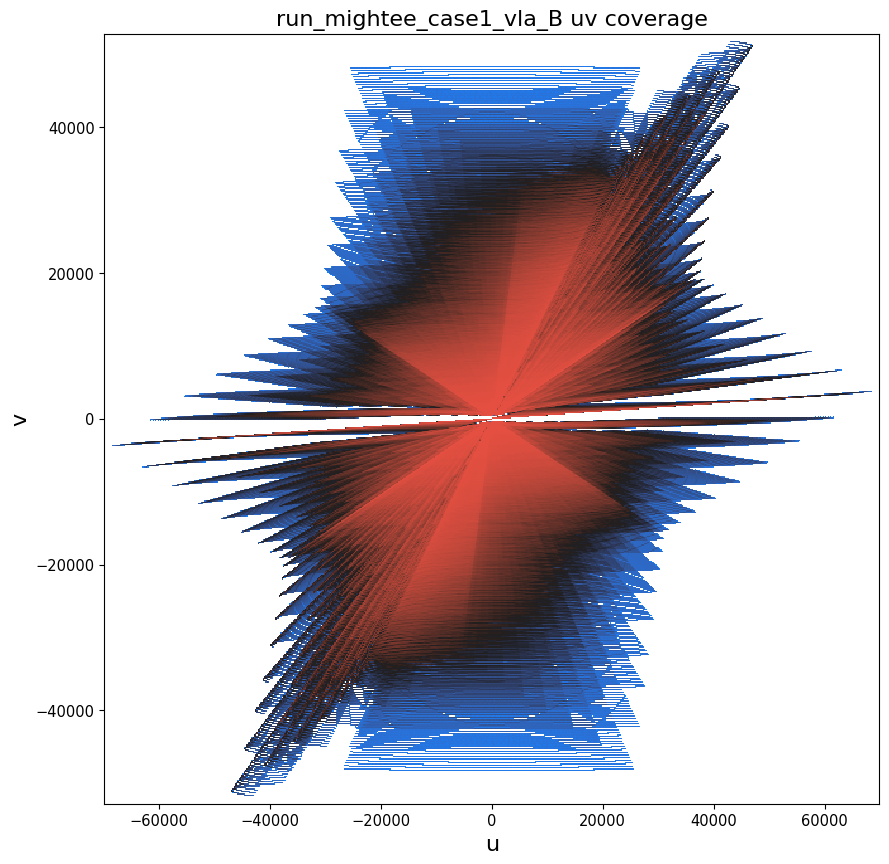
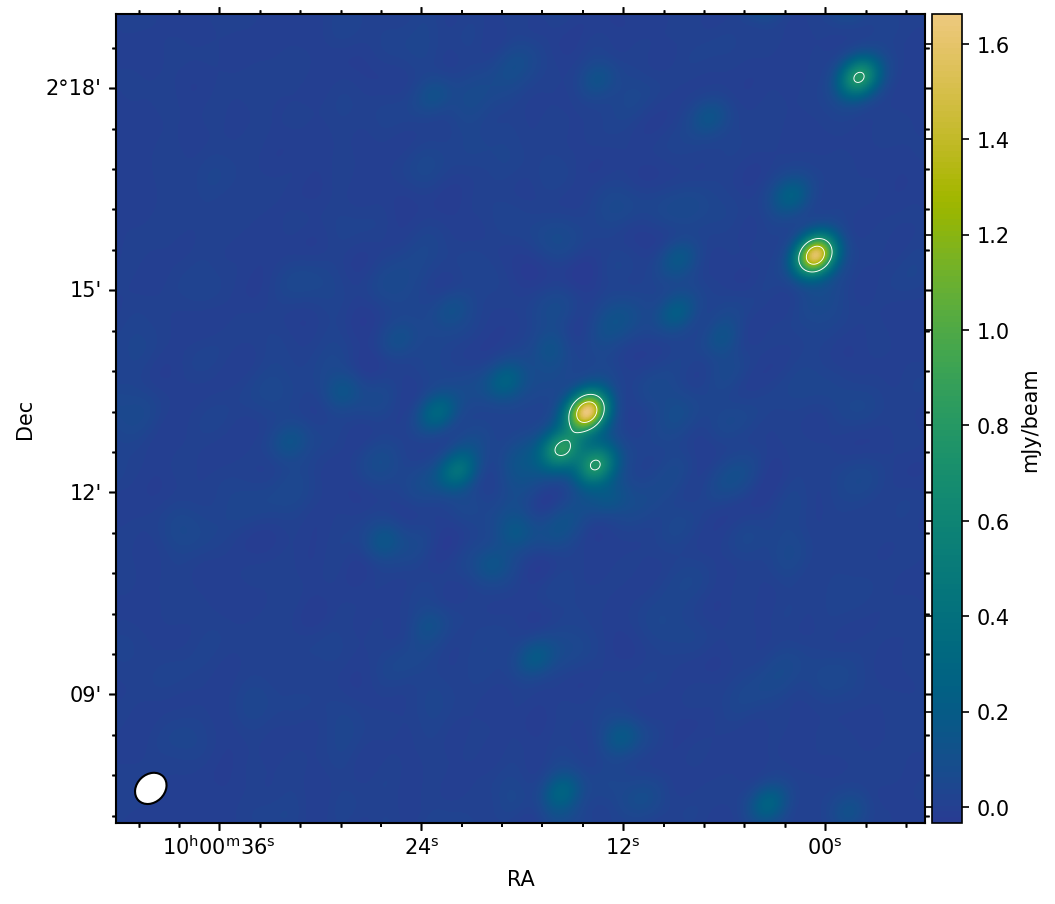
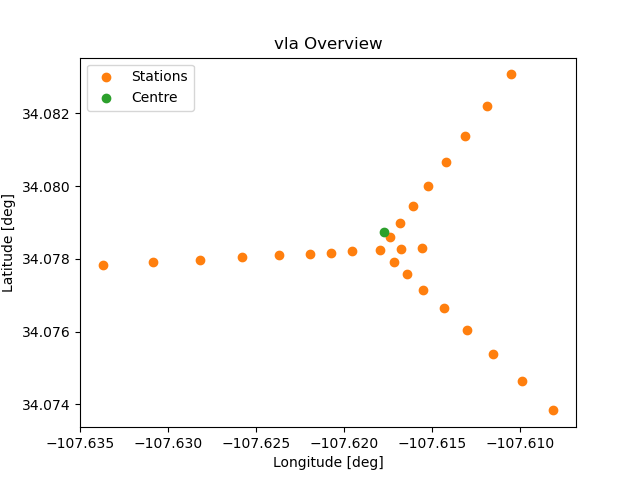
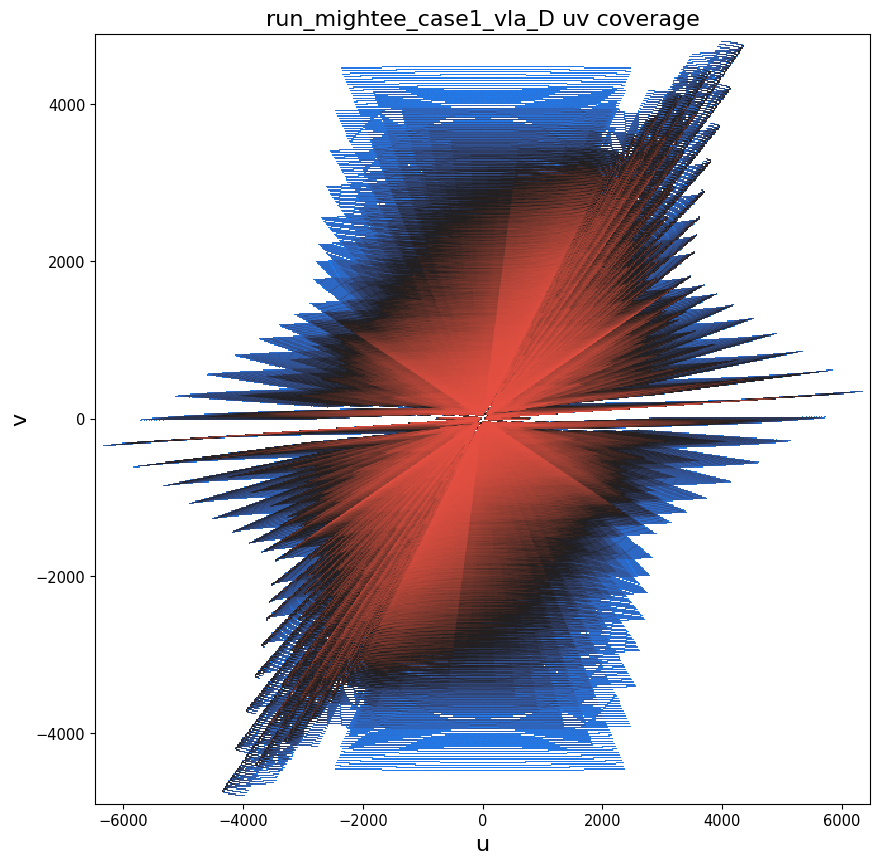
Restored CLEAN images from the WSClean runs. Each card includes the synthesized beam and a toggle to inspect the telescope layout and uv coverage behind that result.
Takeaways
- MeerKAT delivers a 5.0″ × 3.3″ beam over 856 MHz at L-band in 6 h, closely matching real MIGHTEE performance.
- SKA1-MID already achieves a rounder 3.6″ × 3.1″ beam in only 20 min of exposure thanks to 144 15-m antennas — scaling to 4 h would dramatically outperform the precursors.
- VLA B reaches the sharpest beam (3.3″ × 2.3″) at 1.5 GHz, at the cost of reduced surface-brightness sensitivity and fewer antennas.
- VLA D produces a 30.6″ × 24.9″ beam, emphasizing short baselines and extended structure — useful for comparing confusion limits and source blending.
- All runs share the same sky model and phase centre, so differences are dominated by array configuration, uv-coverage, and weighting choice rather than astrophysical input.