Science motivation
MIGHTEE (MeerKAT International GHz Tiered Extragalactic Exploration) is an extragalactic radio survey carried out with the MeerKAT telescope in South Africa. Reproducing this field with SKA1-MID and VLA configurations lets us compare expected performance before SKA operations begin, and quantify the gain in depth and resolution.
- Measure the achievable rms at 1.0–1.7 GHz for matched integration times.
- Compare angular resolution and source confusion between compact and extended arrays.
- Validate the skasim pipeline against real survey parameters and weblog outputs.
Simulation runs
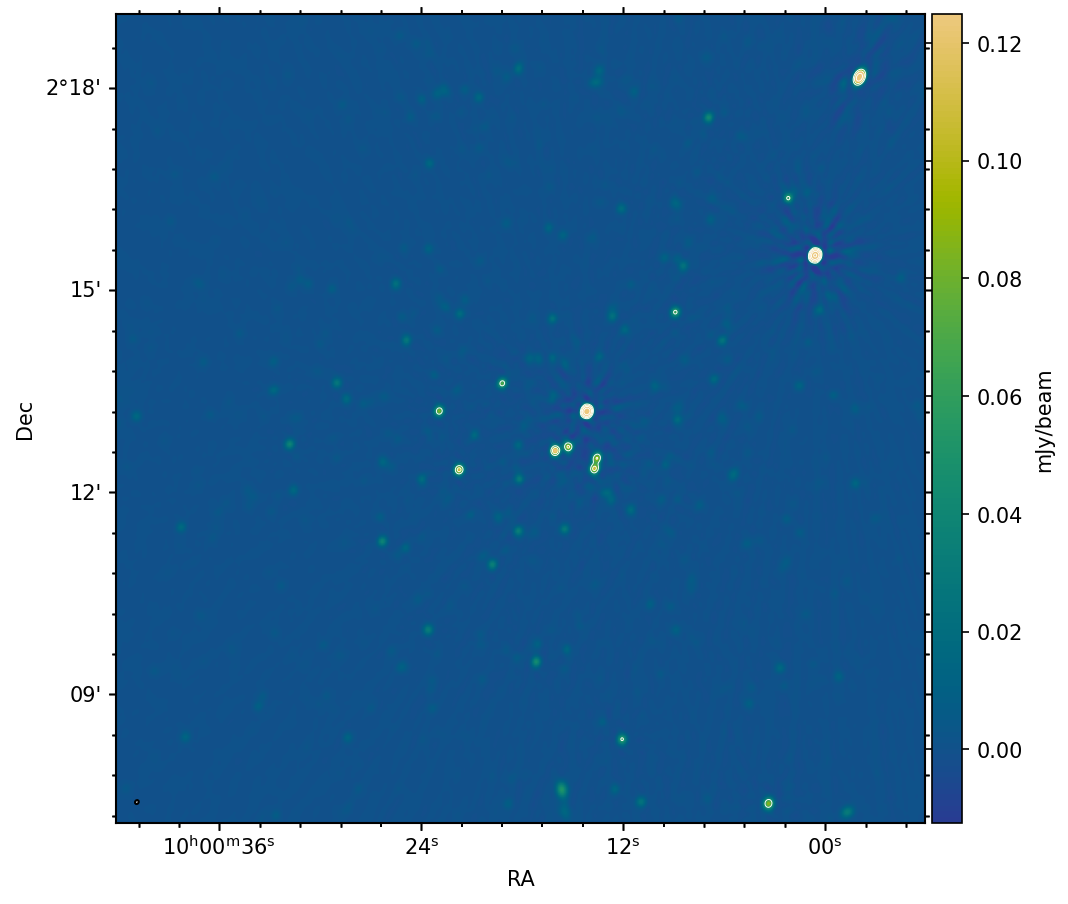
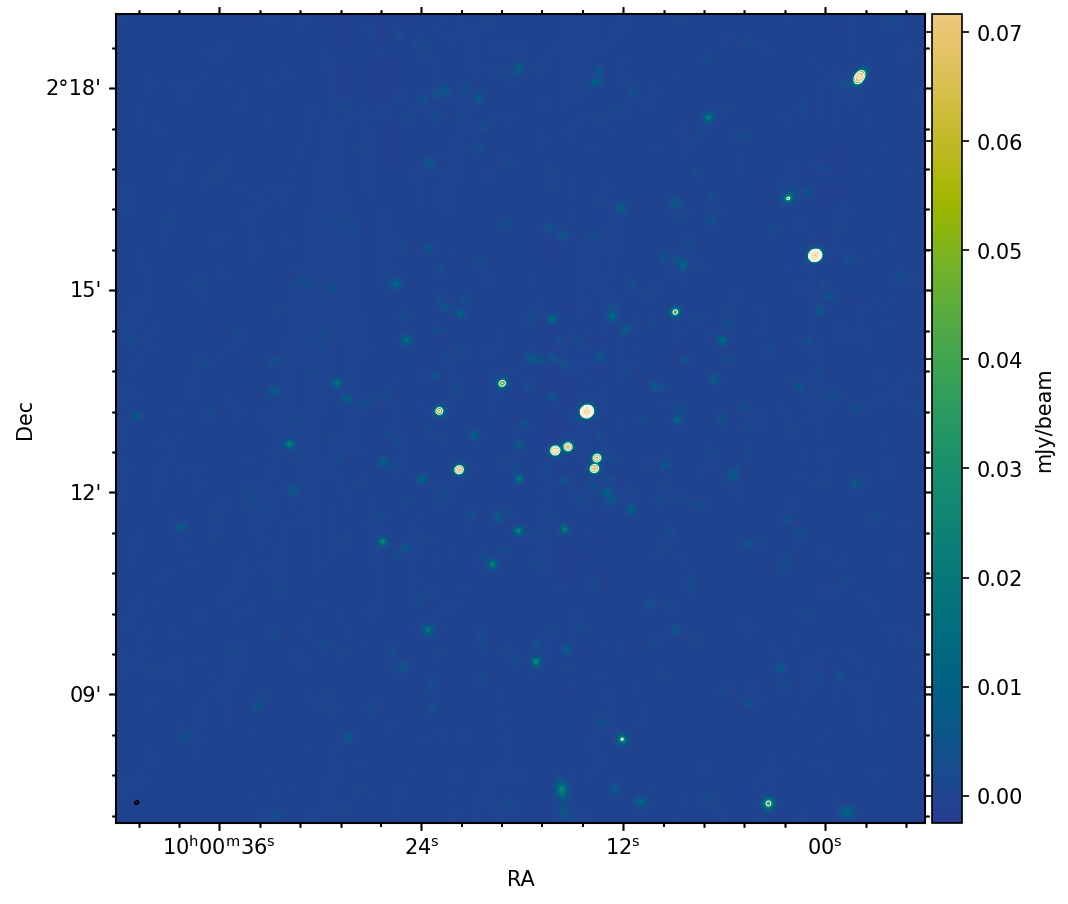
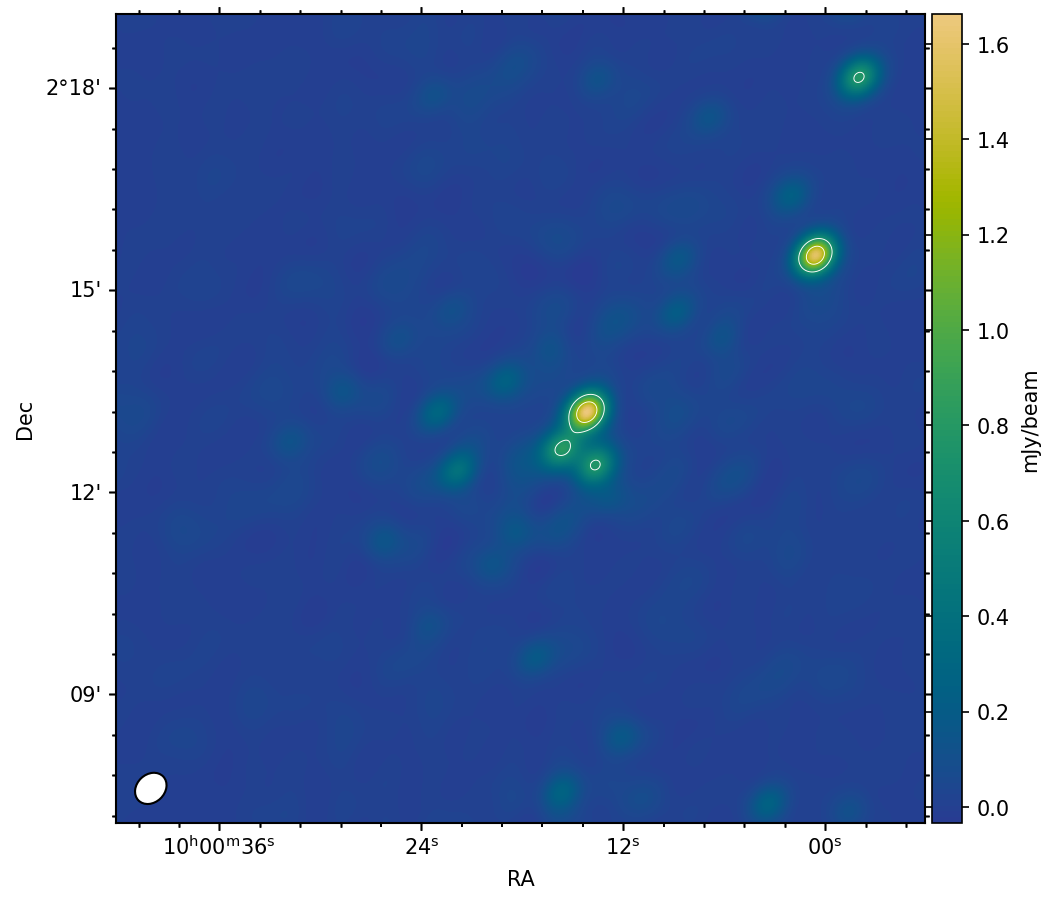
Four matched runs share the MIGHTEE DR1 COSMOS field component sky model, a 0.2° field of view, and imaging with WSClean (plus an OSKAR dirty check). All runs completed and produced weblogs; durations and beam shapes are taken directly from those logs.
| Parameter | MeerKAT | SKA1-MID | VLA B | VLA D |
|---|---|---|---|---|
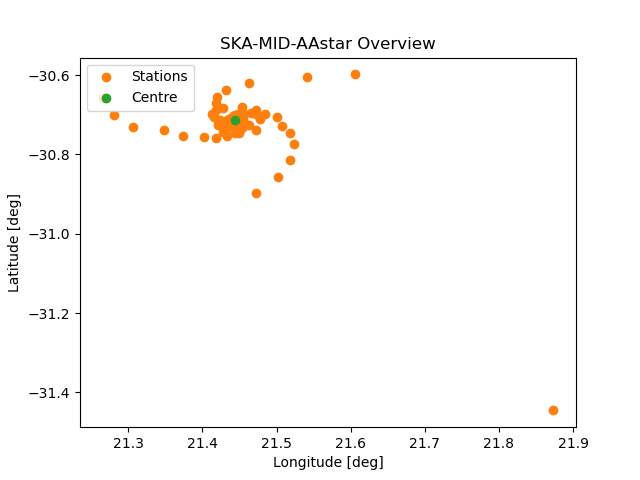
| Dish / Antennas | 13.5 m · 64 | 15.0 m · 144 | 25 m · 27 | 25 m · 27 |
| Frequency | 1284 MHz (856–1712 MHz) | 1310 MHz (950–1670 MHz) | 1500 MHz (1.0–2.0 GHz) | 1500 MHz (1.0–2.0 GHz) |
| Bandwidth | 856 MHz | 720 MHz | 1000 MHz | 1000 MHz |
| Obs time | 6 h | 20 min | 4 h | 4 h |
| Robust | −2 | 0 | −2 | −2 |
| Beam | 5.0″ × 3.3″, PA 145.8° | 3.6″ × 3.1″, PA 144.0° | 3.3″ × 2.3″, PA 118.8° | 30.6″ × 24.9″, PA 133.7° |
Phase centre RA 150.075385°, Dec +2.218322°. Image size 2048 × 2048 pixels at 0.3516 arcsec, FoV 0.2°.
Sky model
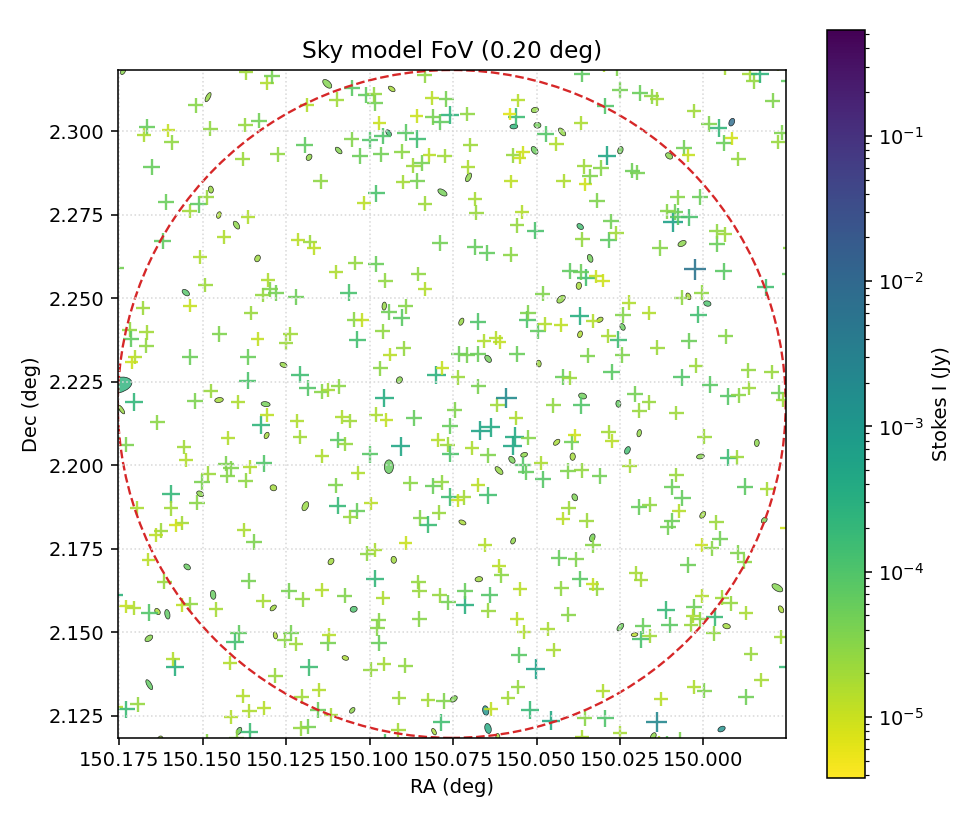
The input catalog is mightee-dr1.json, a
FITS-derived component catalog. Below is the field-of-view
zoom used by all four runs.
Results
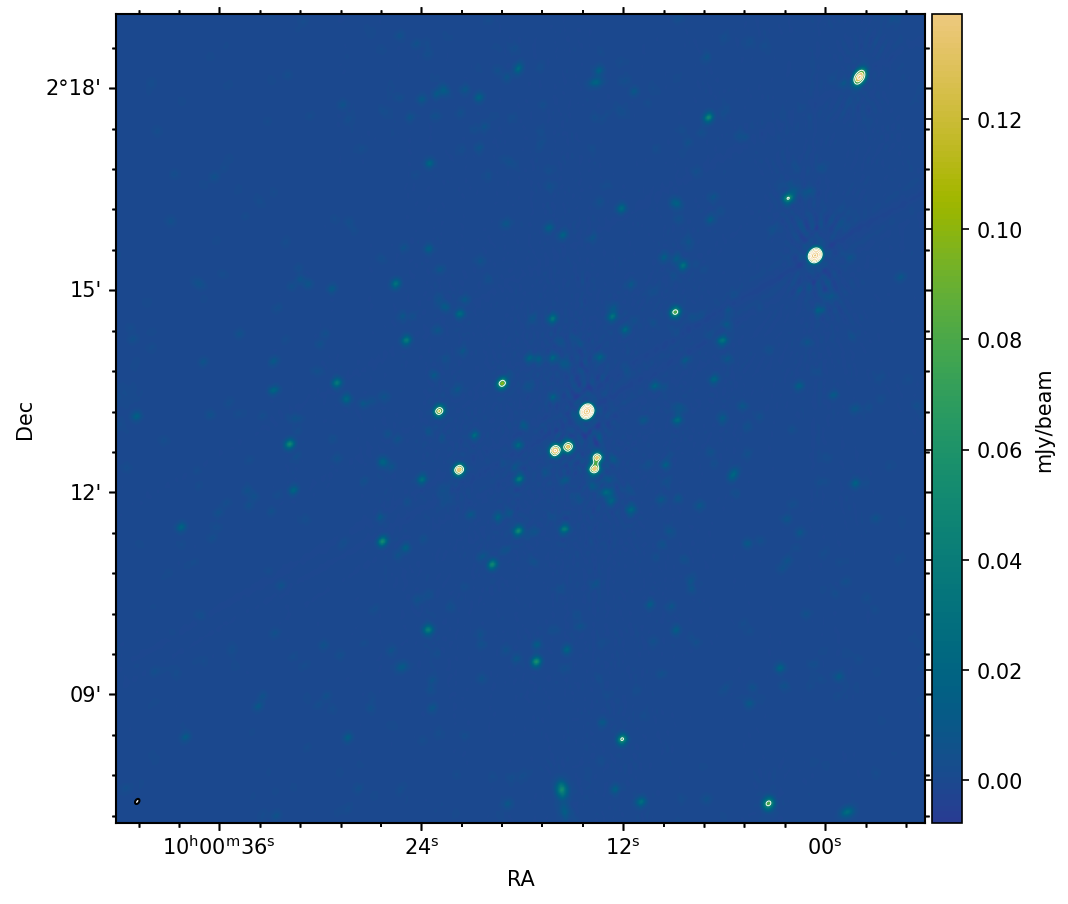
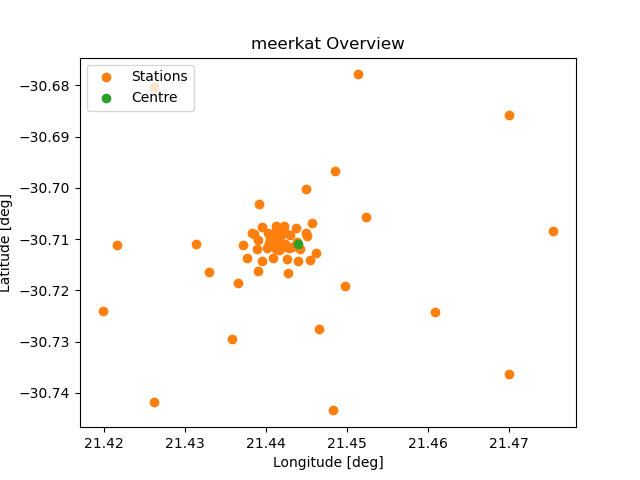
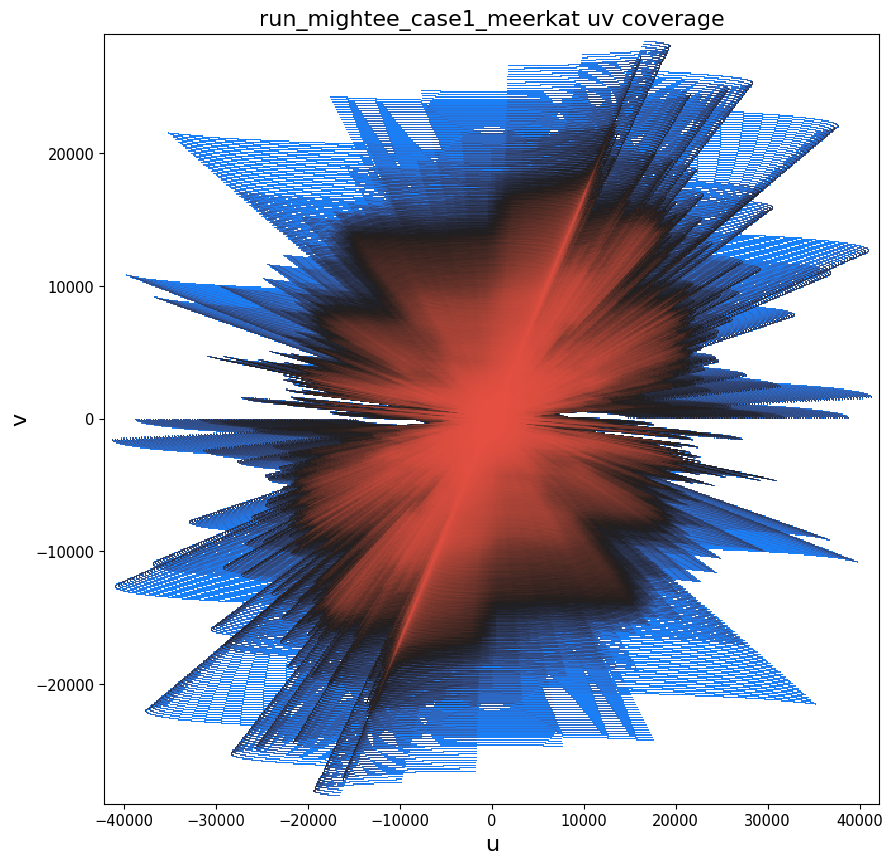
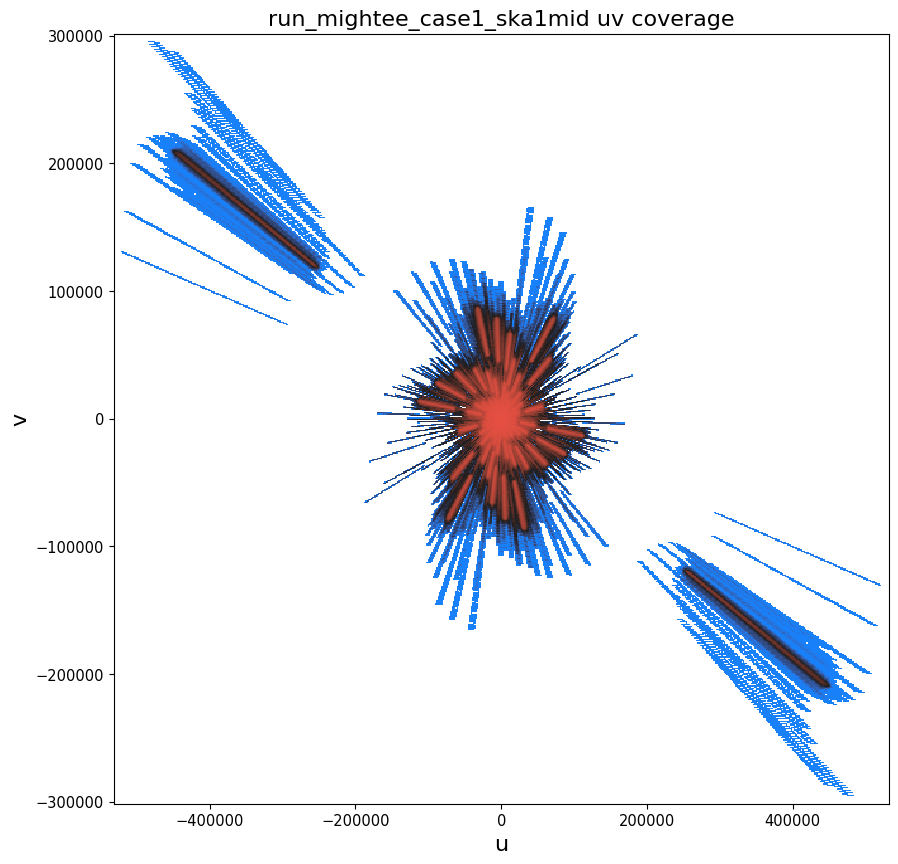
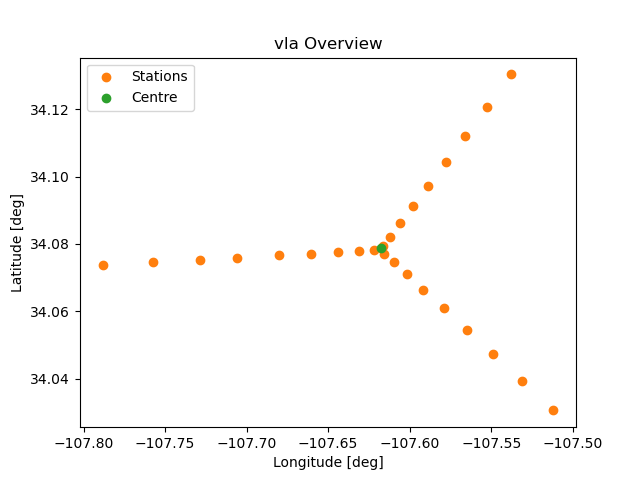
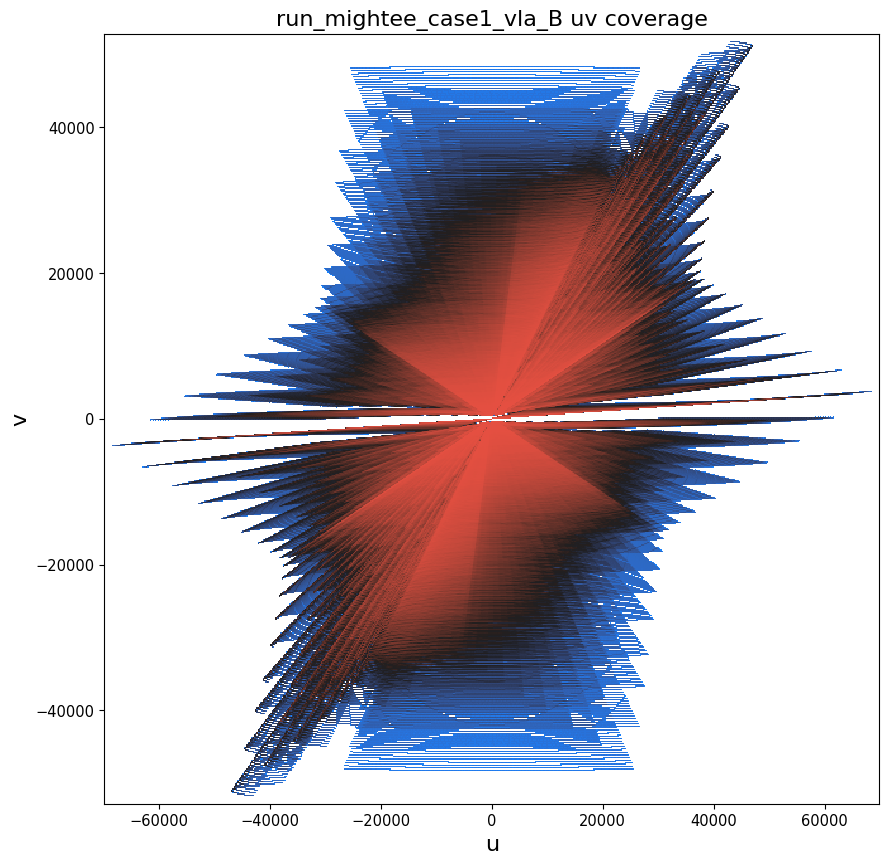
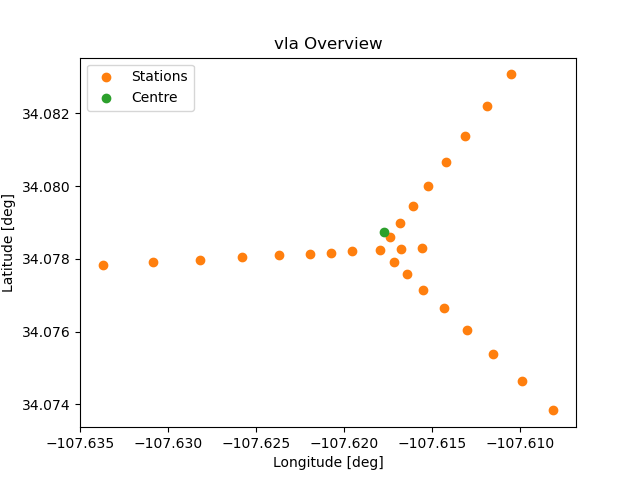
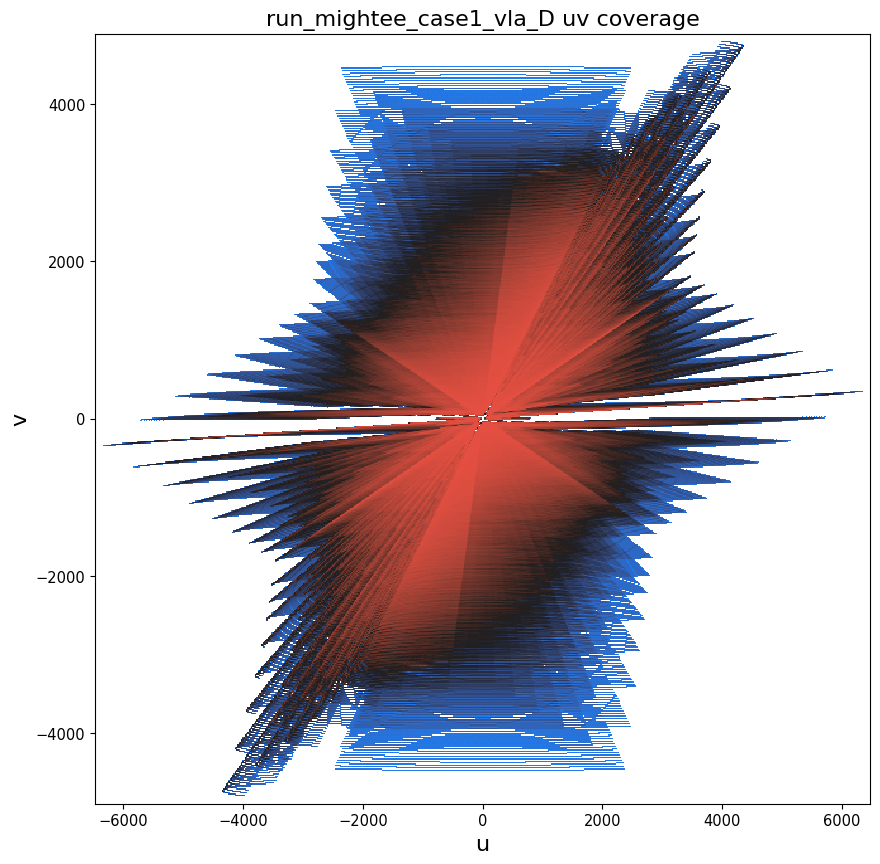
Restored CLEAN images from the WSClean runs. Each card includes the synthesized beam and a toggle to inspect the telescope layout and uv coverage behind that result.
Takeaways
- MeerKAT delivers a 5.0″ × 3.3″ beam over 856 MHz at L-band in 6 h, closely matching real MIGHTEE performance.
- SKA1-MID already achieves a rounder 3.6″ × 3.1″ beam in only 20 min of exposure thanks to 144 15-m antennas — scaling to 4 h would dramatically outperform the precursors.
- VLA B reaches the sharpest beam (3.3″ × 2.3″) at 1.5 GHz, at the cost of reduced surface-brightness sensitivity and fewer antennas.
- VLA D produces a 30.6″ × 24.9″ beam, emphasizing short baselines and extended structure — useful for comparing confusion limits and source blending.
- All runs share the same sky model and phase centre, so differences are dominated by array configuration, uv-coverage, and weighting choice rather than astrophysical input.