A curated portfolio of end-to-end SKA simulations: from synthetic sky models to visibilities, dirty and CLEANed images, and UV coverage across the world's most powerful radio interferometers, created with skasim and powered by the Karabo pipeline.
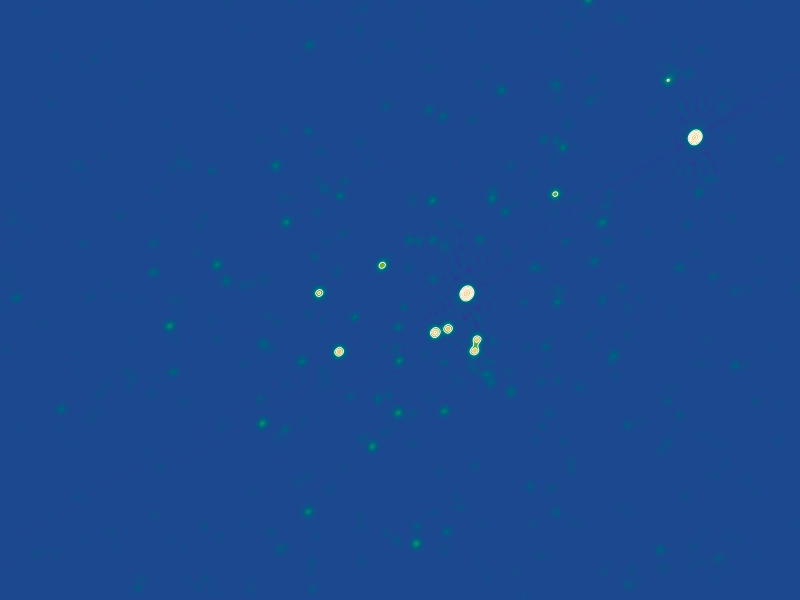
A 1.28 GHz continuum field observed with MeerKAT L-band, SKA1-MID Band 1/2, and the VLA in B and D configurations. All runs share the MIGHTEE DR1 sky model and a matched 0.2° field of view.
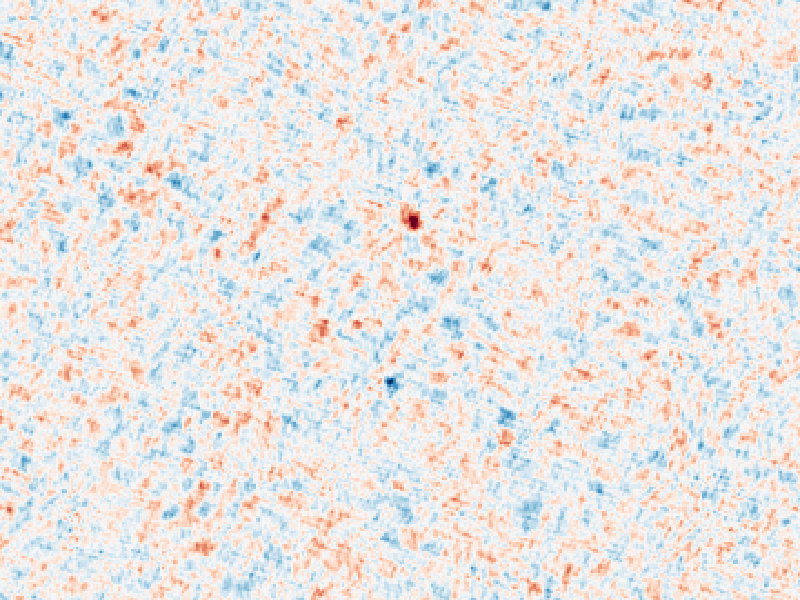
Read the case →A 2 h SKA-LOW-AAstar observation at 175 MHz of a 1° field filled with 60 462 T-RECS sources. Two faint, 80% circularly polarized sources lost in the confused Stokes I image are recovered blindly in Stokes V at +8.1σ and −6.3σ, with no false positives.
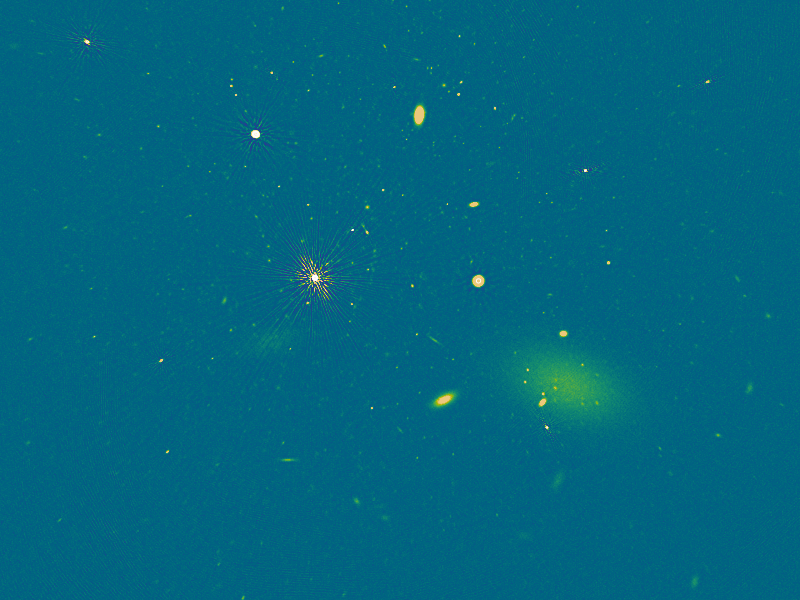
Read the case →Exploring the chronological staged delivery of the SKA telescopes, from the initial AA0.5 verification array to the full AA4 design baseline. Each assembly is simulated on a 0.6° portion of the SKA Data Challenge 1 catalogue with sources down to 10 μJy.
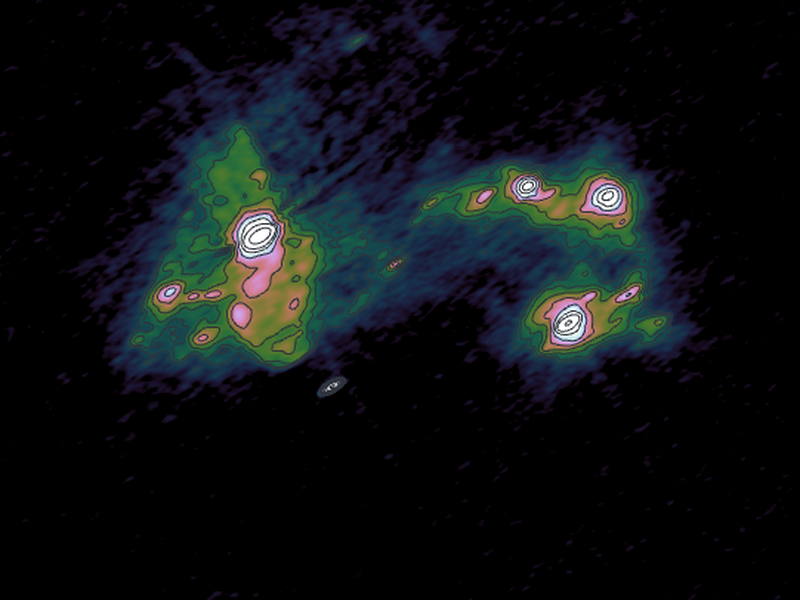
Read the case →Arp 220 and Arp 299 placed at z = 0.15, 0.30, 0.50, 1.00 and 2.00, observed with SKA-MID-AA* at 1.35, 6.5 and 11.9 GHz. Cosmological dimming, angular-size scaling and SFR evolution applied to the same resolved radio galaxy model.
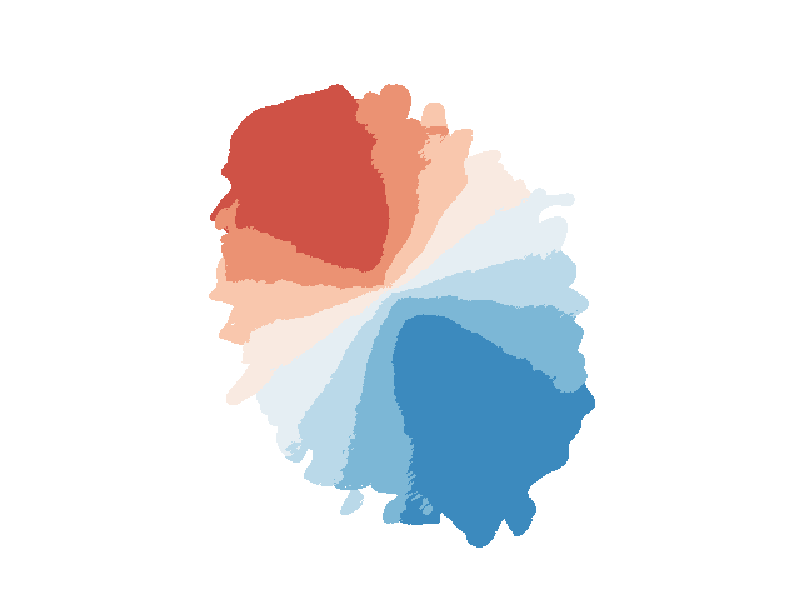
Read the case →A pyHIARD spiral galaxy observed in the 21-cm line with SKA-MID-AA* for 20 min, seen nearly face-on, at 45° and nearly edge-on. Moment maps and position–velocity diagrams show how much of the rotation each geometry recovers.
Read the case →skasim orchestrates OSKAR/Karabo for visibility simulation, CASA for image-model injection, WSClean for imaging, and shadeMS for uv-coverage diagnostics.
Catalogs, component lists, or FITS images with continuum Stokes I and spectral index.
OSKAR/Karabo generates Measurement Sets for the requested telescope, frequency, and integration.
WSClean with configurable Briggs robust, niter, pixels, and FoV; dirty images via OSKAR.
Weblog with previews, FITS downloads, metadata JSON, and shadeMS uv-coverage plots.
Preparing Spanish research groups and technologies for the Square Kilometre Array.
CSIC4SKA is an espSRC-coordinated initiative with the goal of enhancing CSIC members' participation in international collaborations for SKA Key Science Projects, increasing visibility of CSIC studies within the SKA international community, and fostering scientific and technological cooperation.
skasim is a modular SKA simulator for creating synthetic radio-interferometric observations of the SKA (Square Kilometre Array) and precursors. It bridges user-supplied sky models and simulated imaging data products, supporting feasibility studies, definition of science cases and pipeline validation for the SKA community.
skasim is a researcher-oriented simulation package for synthetic radio-interferometric observations, made for the SKA Observatory (SKAO) telescopes, SKA-Low and SKA-Mid, and for other radio interferometers. It takes a user-supplied sky model through to visibilities, dirty and CLEANed images, uv coverage and a weblog of each run. It is built on the Karabo pipeline and uses OSKAR and WSClean.
Any radio interferometer: the SKAO telescopes SKA-Low and SKA-Mid at each array assembly, MeerKAT, the Karl G. Jansky Very Large Array (VLA), the Atacama Large Millimeter/submillimeter Array (ALMA) and others. The cases in this gallery use SKA-Mid from AA0.5 to the AA4 design baseline, SKA-Low (AA*), MeerKAT, and the VLA in its B and D configurations.
Realistic science cases simulated end to end, from a sky model built on published catalogues or galaxy models to the final images: a deep continuum field compared across four telescopes, a blind Stokes V search for circularly polarized sources, the SKA-Mid staged delivery, starburst galaxies moved to cosmological redshifts, and the neutral hydrogen (HI) kinematics of a spiral galaxy.
The source code is on GitHub at espsrc/skasim and the documentation, with configuration examples, is at espsrc.github.io/skasim. Each case page lists the telescope, frequency, observing time and imaging settings of its runs.